Table Of Content
- Field Report: Promoting Evidence-Based Interventions: The Association for Science in Autism Treatment
- Predictors of Time in ABA (None, 12 months, 24 months)
- Availability of data and material
- Applied Behavior Analysis in Children and Youth with Autism Spectrum Disorders: A Scoping Review
- Design and Data.
- Rationale for Current Scoping Review
- Multiple-Baseline and Multiple-Probe Designs
Few (6%) study records compared ABA interventions to control groups or other non-ABA interventions. It is interesting that more recent meta-analyses have trended towards fewer statistically significant improvements than what has been previously reported (Reichow et al., 2018; Rodgers et al., 2020). The comparison records in the current review that did have large enough sample sizes to warrant a statistical analysis against a comparison group often did not find significance across all values or measurement tools used (Cohen et al., 2006). The purpose of the current review therefore is to evaluate the available literature on ABA as an intervention approach in the treatment of ASD in children and youth in an effort to help instruct the scientific community on the most beneficial directions for future research. Moreover, as ABA is commonly recognized at a governmental level as evidence-based, a review of the current ABA literature will help inform other existing and emerging therapies and interventions, researchers, policy makers, and the public of the standard to which established, evidence-based interventions are held.
Field Report: Promoting Evidence-Based Interventions: The Association for Science in Autism Treatment
Because each data point is generated by the same person, the data points are not independent of one another (violating a core assumption of statistical analysis—technically, that the error terms are not independent of one another). Thus, performance represented in each data point may likely be influencing the next (Todman & Dugard, 2001). Autocorrelated data will, in turn, artificially inflate p values and affect Type 1 error rates. Lang and colleagues (2011) used an ATD to examine the effects of language of instruction on correct responding and inappropriate behavior (tongue clicks) with a student with autism from a Spanish-speaking family.
Nonparametric statistical tests for single-case systematic and randomized ABAB…AB and alternating treatment ... - ScienceDirect.com
Nonparametric statistical tests for single-case systematic and randomized ABAB…AB and alternating treatment ....
Posted: Wed, 27 Dec 2017 00:58:04 GMT [source]
Predictors of Time in ABA (None, 12 months, 24 months)
As in the multiple-baseline/multiple-probe designs, the possibility of generalization across behaviors must be considered, and steps should be taken to ensure the independence of the behaviors selected. In addition, care must be taken to ensure equal difficulty of the responses assigned to different conditions. The results of this study (see Figure 7) demonstrated that the student produced a higher number of correct responses and engaged in fewer challenging behaviors when instruction was delivered in Spanish than in English.
Availability of data and material
In addition to having larger sample sizes and more frequent use of validated measurement scales, records in the Between-Groups Comparisons section more often incorporated statistical analyses, approximately 85% of the time compared with approximately 15% of the entire cohort. Although statistical significance was not considered when initially coding the results in order to align with the rest of the sample, an informal review was conducted based on the reported statistical significance of the improvement of one condition over another. Overall, it was found that not all improvements were significant or assessed for statistical significance (Dawson et al., 2010; Dugan, 2006; Howard et al., 2014; Kovshoff et al., 2011).
Applied Behavior Analysis (ABA)
The issue of when, if ever, the data generated from SSEDs should be statistically analyzed has a long and, at times, contentious history (Iwata, Neef, Wacker, Mace, & Vollmer, 2000). We approach this issue by breaking it into four related but distinct parts that include detecting effects, determining their magnitude and the quality of the causal inference, and data-based decision making. Space considerations preclude treating any one aspect of this issue exhaustively (suggestions for further reading are provided).
Applied Behavior Analysis in Children and Youth with Autism Spectrum Disorders: A Scoping Review

Task analyses of interventionist responses were developed for each condition of the prompt hierarchy comparison. An independent observer rated whether the interventionist correctly or incorrectly engaged in each response. The mastery criterion was 90 % or more correct independent responding for two consecutive sessions. After having met the mastery criterion with one prompt-fading procedure, additional sessions were conducted with the remaining two conditions.
Design and Data.

In the end, effect detection is determined by data patterns in relation to the phases of the experimental design. It seems that the clearer one is about the logic of the design and the criteria that will be used to determine an effect in advance, the less one needs to rely on searching for a “just-in-case” test after the fact. One disadvantage of all designs that involve two or more interventions or independent variables is the potential for multiple-treatment interference.
Rationale for Current Scoping Review
Nonregression methods involve simpler hand calculations, map on to visual inspection of the data, and are less biased in the presence of small numbers of observations (Scruggs & Mastropieri, 1998). Regression methods are less sensitive to outliers, control for trend in the data, and may be more sensitive to detecting treatment effects in slope and intercept (Gorman & Allison, 1996). Therefore, large longitudinal prospective studies comparing ABA-based and different interventions treating children and youth with ASD are needed. With a holistic view of all of the scientific evidence behind ABA, governments will be able to more accurately compare any existing and emerging interventions to the well-established norm of ABA. Until a SoC is established, all interventions for children and youth with ASD must be held to the existing standard set by ABA to be considered effective. This was a retrospective study that used data from a health system Autism Registry to identify the target population and obtain sociodemographic and service utilization data.
The Between-Groups Comparisons section had the highest median number of participants at 34, and the largest variation in the number of samples with an interquartile range (IQR) of 37. The entire cohort, ABA Impact section and Comparisons of ABA Techniques section each had a median number of 3 and an IQR of 1, respectively. ABA is considered an evidence-based best practice treatment by the US Surgeon General and by the American Psychological Association. The BCBA will start by doing a detailed assessment of each person’s skills and preferences.
A qualified and trained behavior analyst (BCBA) designs and directly oversees the program. They customize the ABA program to each learner's skills, needs, interests, preferences and family situation. In a health system implementation of ABA for children with ASD, there were high rates of ABA discontinuation and low ABA dosing. These challenges may diminish the potential benefits of ABA, even in a context where there is mandated commercial insurance coverage. Informed consent was obtained from the caretakers of all the participants included in the study. With Alternating Treatment Design in ABA, you can efficiently evaluate treatments and find the most effective approaches for your child’s learning and development.
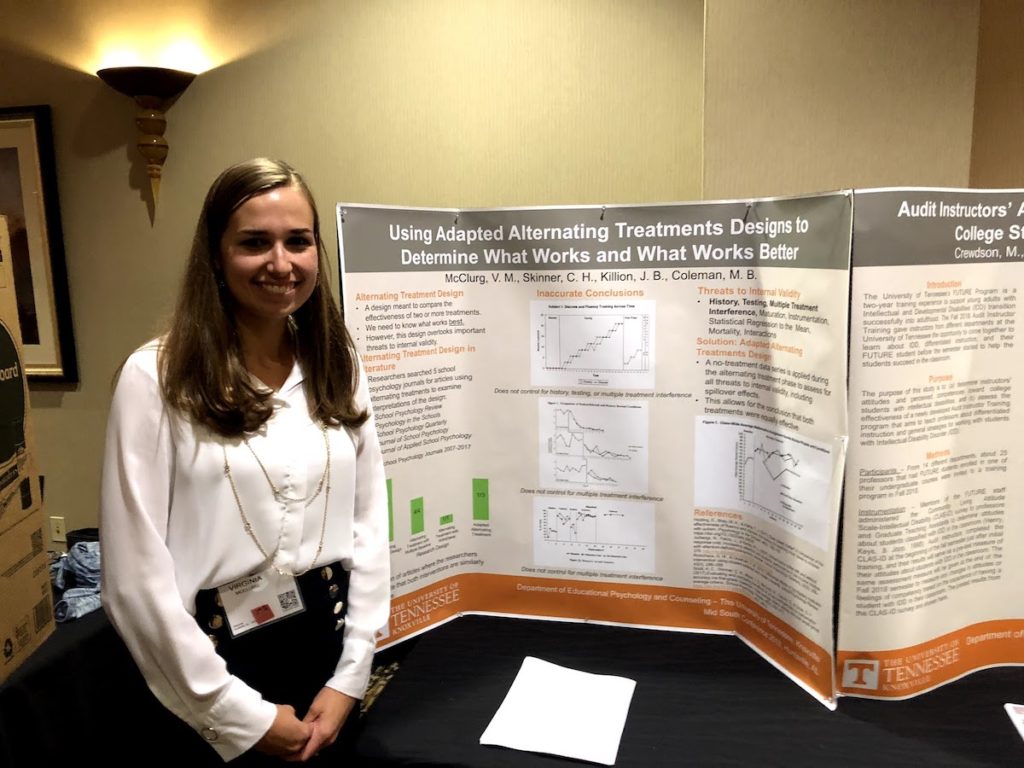
Overall, the four issues discussed above—effect detection, magnitude of effect, quality of the inference, and practice decisions—reflect the critical dimensions involved in the analysis of SSED. The importance of any one dimension over the other will likely depend on the purpose of the study and the state of the scientific knowledge about the problem being addressed. The AATD eliminates some of the concerns regarding multiple-treatment interference because different behaviors are exposed to different conditions.
The goal of this tutorial is to familiarize readers with the logic of SSEDs and how they can be used to establish evidence-based practice. The basics of SSED methodology are described, followed by descriptions of several commonly implemented SSEDs, including their benefits and limitations, and a discussion of SSED analysis and evaluation issues. Finally, a number of current issues in SSEDs, including effect size calculations and the use of statistical techniques in the analysis of SSED data, are considered.


No comments:
Post a Comment