Table Of Content

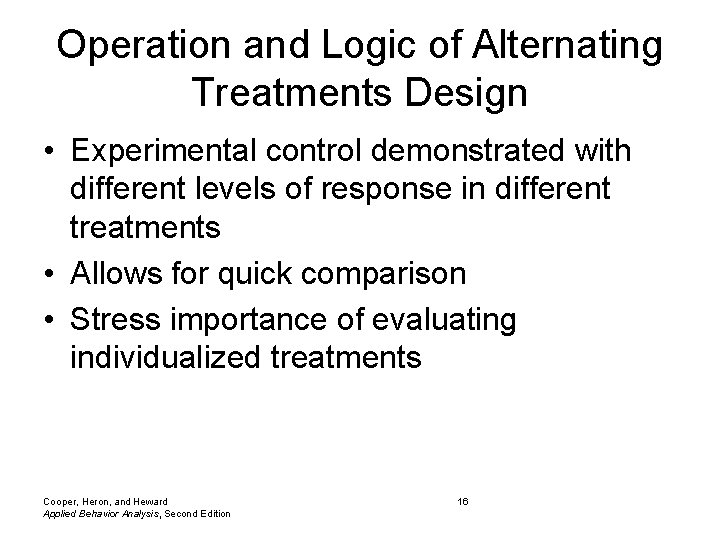
This design involves systematically and alternatingly implementing multiple treatments, allowing for quick evaluation and comparison of the outcomes of each treatment. An important note in terms of finding appropriate and effective interventions in the treatment for ASD, which is not limited to ABA, is the establishment of standards of care (SoC). Unfortunately, even though there is a wealth of knowledge regarding the assessment, diagnosis and treatment of ASD, there is still no clear SoC for the treatment of ASD (Department of Defense, 2019, 2020). In general, outcome measures should indicate a true measure of benefit to the child and their family, in addition to providing relevance within practice and the ability to replicate across research (Rodgers et al., 2020).
What is Applied Behavior Analysis?
First, the authors assessed response acquisition following four types of prompt topographies (verbal, gestural, model, and physical). Then, the prompt topography that was identified as being most efficient (i.e., task acquisition in the fewest training trials) for each participant was included in the assessment of prompt-fading procedures, which compared MTL, LTM, and progressive time delay procedures. The authors used these results to establish an efficiency ranking of the prompt-fading procedures for each participant. Next, the authors conducted a generality test to assess the comparative efficiency of prompt-fading procedures when used to teach functional domestic and vocational skills to the participants.
Predictors of Patient Adaptive Behavior Outcomes
(PDF) Statistical analysis for single case data: Draft chapter - ResearchGate
(PDF) Statistical analysis for single case data: Draft chapter.
Posted: Sun, 24 Jan 2016 01:02:07 GMT [source]
There were other deviations from the procedures, such as assigning two gross-motor movements to James’ MTL condition and two fine-motor movements to his LTM condition; however, the reliability of the findings across participants suggests that these integrity issues had little or no effect. Second, Joseph demonstrated a decrease in accuracy of responding during maintenance probes. It is important to identify not only optimal teaching procedure but also procedures that lead to better maintenance of responding as well. Third, the measurement of efficiency employed in this study was sessions to criterion, while previous studies reported a broader set of measures, such as trials to criterion, sessions to criterion, and number of errors (e.g., Libby et al. 2008). Including a larger number of measurements can increase internal validity when the outcomes are congruent or can suggest new avenues of research when they are not, as was the case in Libby et al. (2008). Fourth, the prompt topography assessment identified stimuli that were potent enough to evoke correct responding.
Recent Developments in Group-Sequential Designs
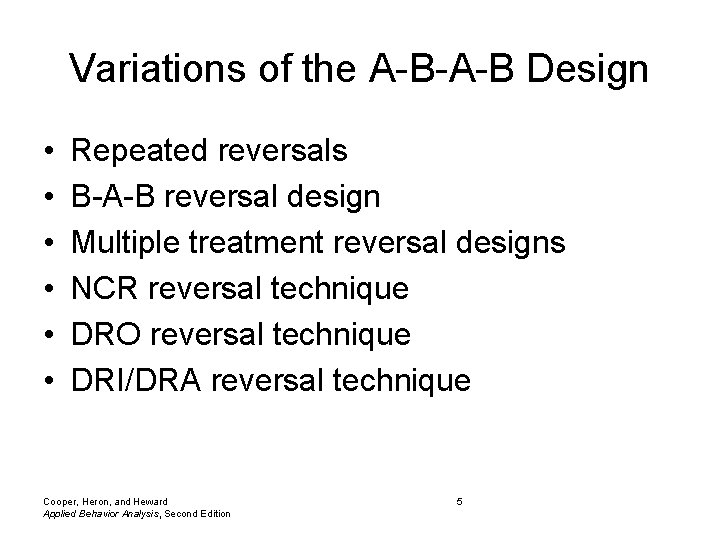
The patient outcome measure available in health system records, the Vineland-II, includes only adaptive behavior, not maladaptive behavior or other behavioral measures. Finally, our primary outcome measure was a parent-report measure and as such may have been biased towards under-estimation of patient progress out of desire for service continuation. A recent example of the withdrawal design was executed by Tincani, Crozier, and Alazetta (2006). They implemented an ABAB design to demonstrate the effects of positive reinforcement for vocalizations within a Picture Exchange Communication System (PECS) intervention with school-age children with autism (see Figure 3).
EIBI showed improvement over the comparison 21%–25% of the time among the cognitive, language, social/communication, and adaptive behavior outcomes. TAU and Other interventions occasionally showed greater improvement in some outcome measures (≤ 22% of the time). After selecting the sample, we conducted a detailed review of patient electronic medical records to extract data on services delivered and patient outcomes.
Multiple-Baseline and Multiple-Probe Designs
Withdrawal / Reversal Design starts without the intervention for baseline, adds the intervention and then removes it. The authors thank Joelle Fingerhut for reviewing a version of the manuscript and providing feedback on formal and style issues related to the English language. Hypothetical data demonstrating unambiguous changes in level (Panel A), trend (Panel B), and variability (Panel C). Please list any fees and grants from, employment by, consultancy for, shared ownership in or any close relationship with, at any time over the preceding 36 months, any organisation whose interests may be affected by the publication of the response.
Nonparametric statistical tests for single-case systematic and randomized ABAB…AB and alternating treatment ... - ScienceDirect.com
Nonparametric statistical tests for single-case systematic and randomized ABAB…AB and alternating treatment ....
Posted: Wed, 27 Dec 2017 00:58:04 GMT [source]
Applied Behavior Analysis (ABA)
Clinical reports obtained through chart review of electronic medical records were used to determine patient adaptive behavior at the time of referral for services and ABA service use characteristics at 6, 12, 18 and 24 months in treatment. Once the participant reached the mastery criterion in a condition, maintenance probes were conducted. One maintenance probe was conducted for every five training sessions in the other two conditions.
Description of Included Studies
Direct replication refers to the application of an intervention to new participants under exactly, or nearly exactly, the same conditions as those included in the original study. This type of replication allows the researcher or clinician to determine whether the findings of the initial study were specific to the participant(s) who were involved. Systematic replication involves the repetition of the investigation while systematically varying one or more aspects of the original study. This might include applying the intervention to participants with more heterogeneous characteristics, conducting the intervention in a different setting with different dependent variables, and so forth.
Start Services:
The current scoping review spanning 770 study records showed positive and beneficial effects of ABA for children with ASD across seven outcome measures. However, only 32 (4%) assessed ABA impact, had a comparison group, and did not rely on mastery of specific skills to mark improvement. There has been an ongoing recommendation for larger scale studies over the last 20 years with respect to children and youth with ASD (Eldevik et al., 2009; Reichow et al., 2018; Smith, 2012), as well as for long-term outcomes for adults with ASD (Bishop-Fitzpatrick et al., 2013; Rodgers et al., 2020).
The range of included outcome categories was selected in order not to limit the scope of the literature search and synthesis for this review so that a comprehensive review of the application of ABA for ASD and mixed-diagnosis populations across the entire time span and age range of the search could be conducted. The purpose of this study was to examine patterns of service receipt and patient outcomes for children receiving Applied Behavior Analysis (ABA) for Autism Spectrum Disorder in an integrated healthcare system where commercially insured children were covered by a state autism mandate. The first author (referred to as the interventionist) conducted and collected data for the study. At the time of the study, the interventionist had 7 years of experience working with individuals with developmental disabilities using behavior analytic procedures and was a board-certified behavior analyst. A second observer collected data for interobserver agreement and treatment integrity purposes. The second observer had been trained to collect data by the interventionist prior to assisting with the current study.
The authors use person-centered language to describe Autism Spectrum Disorder in this paper because this is the standard in scientific and clinical literature. However, we acknowledge that such language is not preferred by all individuals in the disability community and that there is heterogeneity in how individuals with autistic traits and their families prefer to identify themselves. Four or five other children, one teacher, and three teacher assistants were present in the room while the study was conducted. Each classroom was equipped with a computer, tables, chairs, and shelves to store materials. It was typical for participants to receive this kind of individualized instruction in their classrooms throughout the day.
This condition further strengthened the evidence for the effectiveness of the intervention, as performance on all three words sets reached 100% by the end of the phase. In sum, the latency to change observed during the alternating treatments phase meant that this study merits a rating of moderate evidence in favor of the intervention. Unlike the Lang et al. (2011) study, the design used in this study met the WWCH standards. This was because, in addition to meeting the minimum number of sessions per phase, it included a direct comparison between three conditions as well as a direct comparison with a baseline phase.
However, this may not accurately indicate the ability of a participant to maintain such a skill, particularly if the mastery criterion is low (McDougale et al., 2020; Richling et al., 2019). In some instances, criterion parameters and/or experimental procedures were altered in order to reach the desired measure (Charlop et al., 1985; Valentino et al., 2015). Thus, discretion should be taken when evaluating outcomes reliant on the mastery or extinction of skills or behaviors (McDougale et al., 2020). In addition, only 41% of the records conducted some form of investigation into follow-up or maintenance of the given outcome measure(s). Likewise, generalization was only investigated in 31% of the study records, again prompting the question of whether or not these task- or behavior-specific improvements resulted in overall changes in the child’s skills, function, or behaviors. Further research may be required to assess retained changes rather than changes upon intervention (Bishop-Fitzpatrick et al., 2013; Smith, 2012).
We briefly review the key findings and explore why, in spite of strong supporting evidence, the uptake of evidence-based procedures remains poor. All the procedures performed in the study involving human participants were in accordance with the ethical standards of the institutional and/or national research committee and with the 1964 Helsinki Declaration and its later amendments or comparable ethical standards. The study was approved by the Institutional Review Board of the City University of New York (CUNY).